Under the hood
How Crypto Mixers Work on Bitcoin and on Ethereum
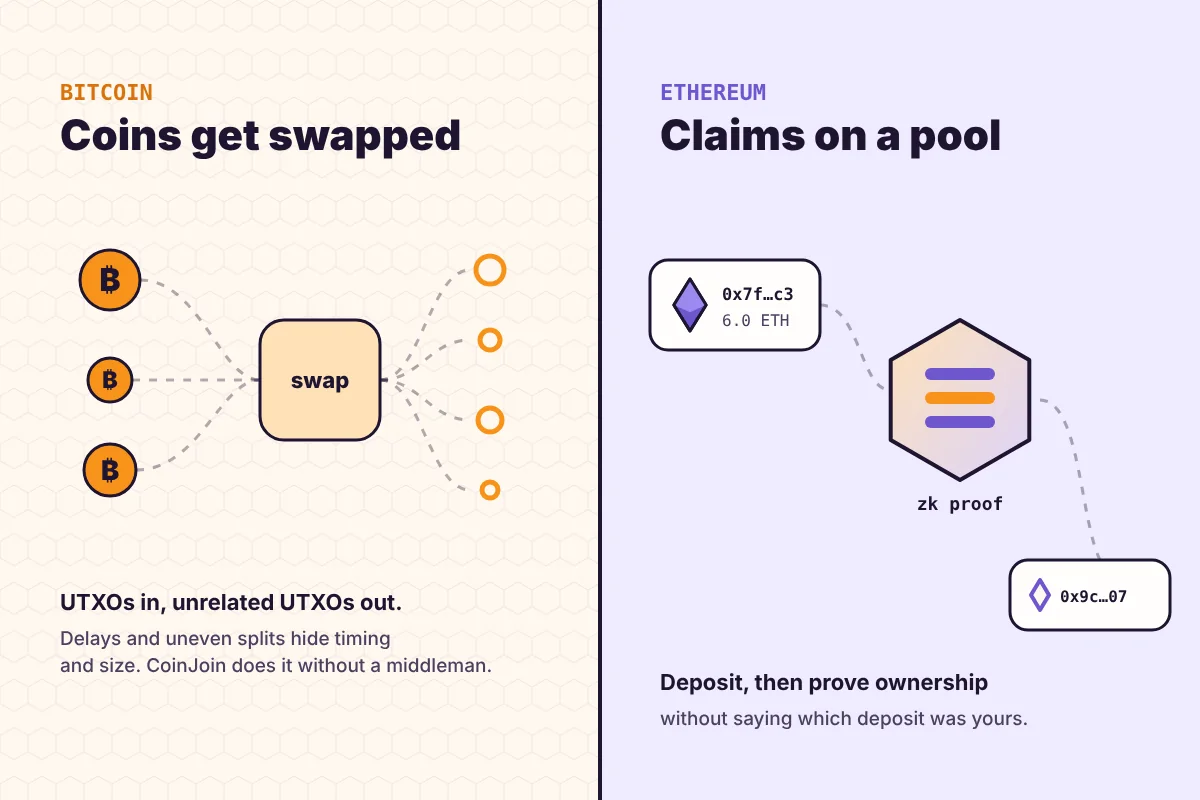
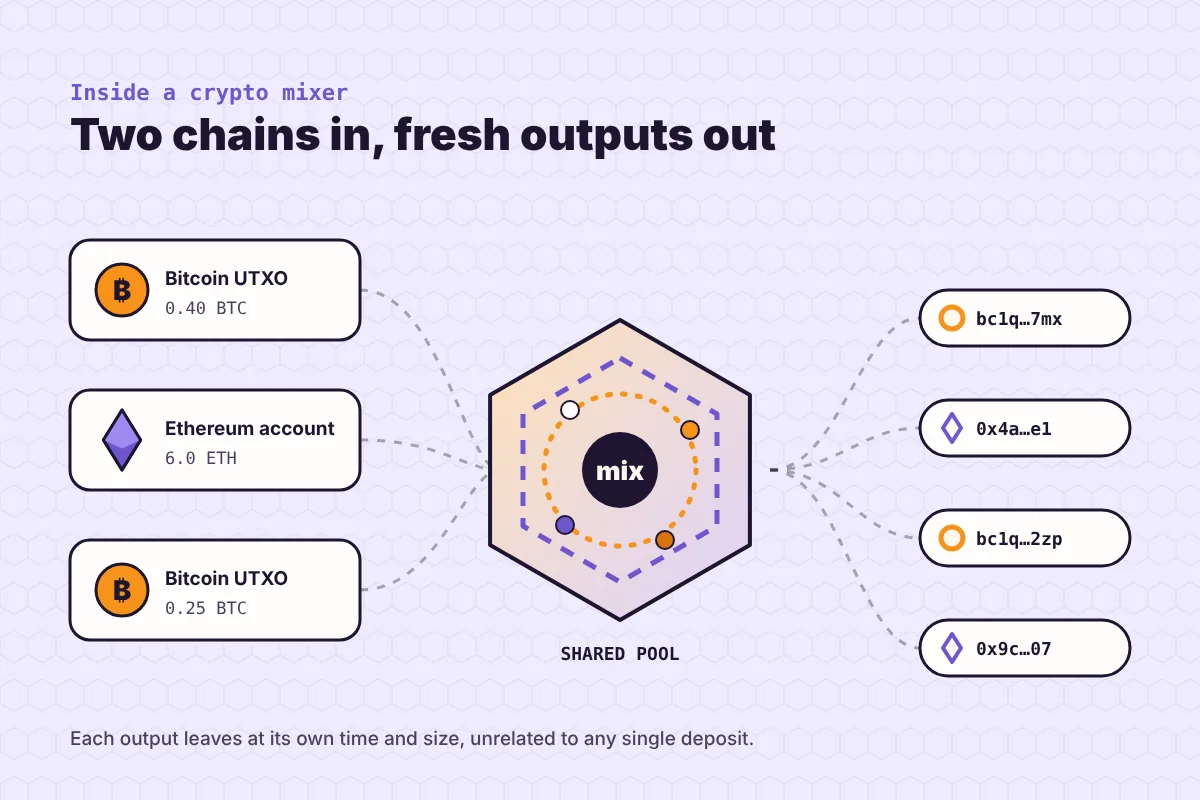
Bitcoin moves in discrete coins called UTXOs. A payment spends some of them and creates new ones, and analysts follow those coins hop by hop. That is why a bitcoin mixer can work by simply swapping coins: you send yours in, you get back different coins that never touched your history, ideally later and in uneven pieces. CoinJoin does the same thing without a middleman by having many people sign one transaction with identical outputs.
Ethereum keeps balances per account instead. There are no coins to swap, only a number on an address that everyone can see grow and shrink. So privacy there means a shared pool contract: you deposit, the contract records a secret commitment, and later you prove with zero-knowledge math that you own one of the deposits without saying which. Fixed sizes such as 1 ETH make deposits look alike; encrypted notes, as in Railgun, let any amount blend.
Whatever the chain, the strength of any mix is the crowd you hide in and the habits you keep afterwards. A pool with five users protects nobody, however clever the math.